How it works
Input
Unprocessed volumetric & DICOM datasets
O(1) Ops
Patent-pending surface extraction
Output
Rendered interactive geometry
Traditional volumetric visualization requires extensive preprocessing — segmentation, mesh generation, format conversion — before any data can be rendered. This pipeline can take hours and requires specialized software, powerful hardware, and technical expertise that most end users don't have.
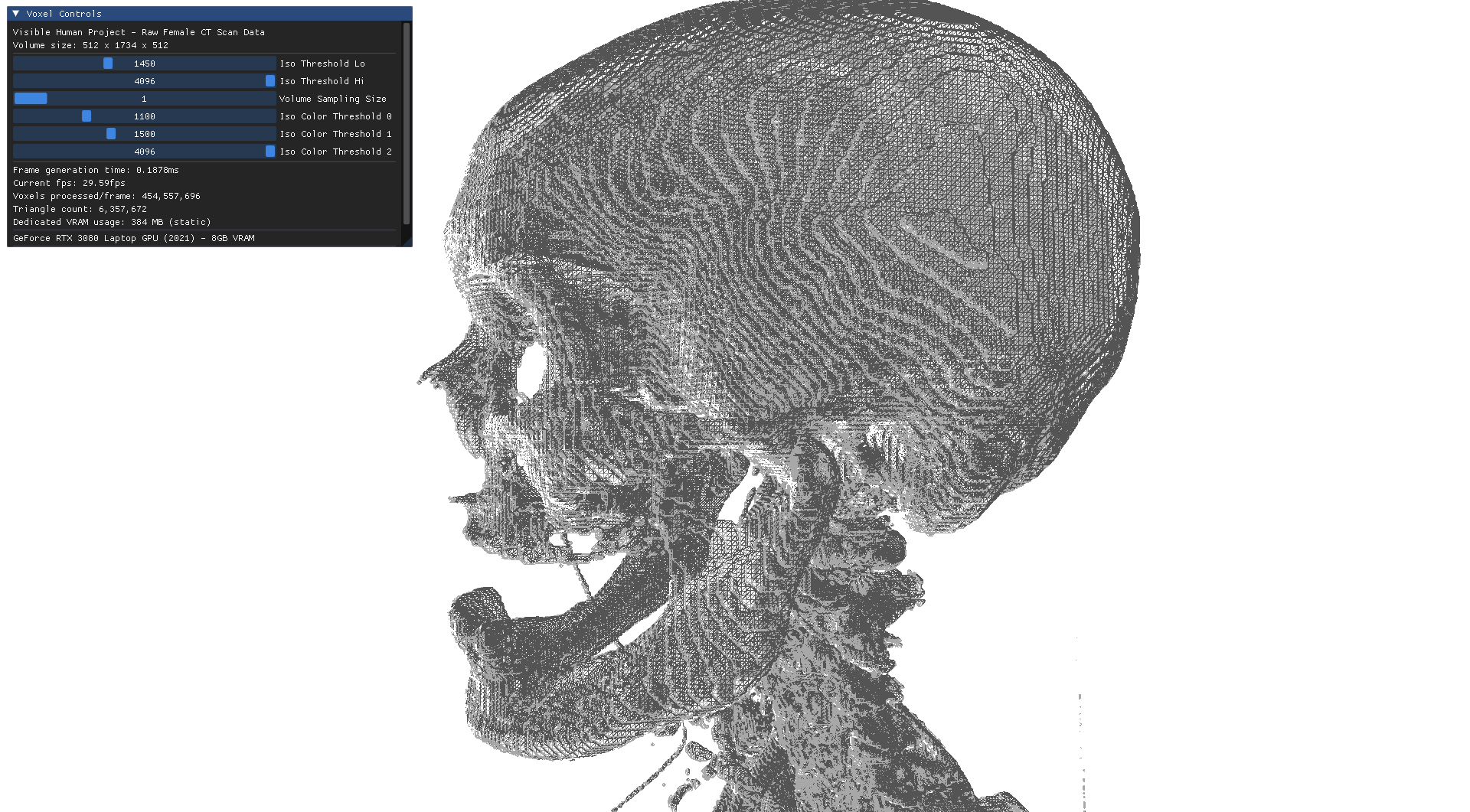
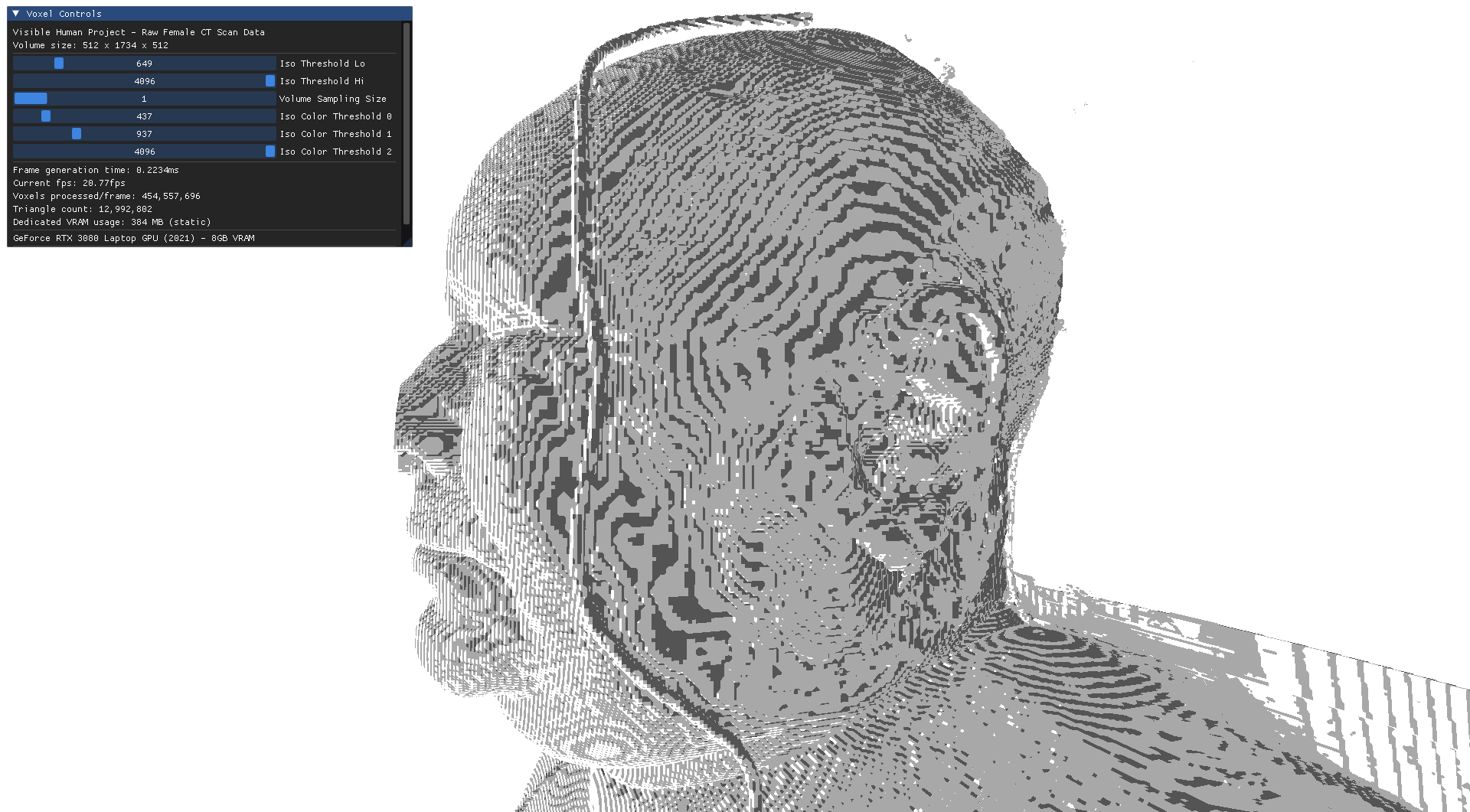
Our approach bypasses this entirely. The O(1) Ops infrastructure operates directly on raw, unprocessed volumetric data. A patent-pending surface extraction algorithm analyzes the dataset in real time and generates renderable geometry on the fly, producing millions of triangles per frame at interactive framerates on consumer-grade GPUs.
The current implementation is a standalone system built from scratch in Vulkan for maximum control over the graphics pipeline. By thresholding raw voxel intensity values, users can interactively isolate and visualize different tissue types, densities, and structures — from bone to soft tissue — without ever leaving the application or waiting for a pre-processing step to complete.